
As the new year quickly gains momentum, it’s easy to be swept back into the noise and pace of everyday life. At the heart of Samantha’s art is a lasting commitment to the wellbeing that comes from nurturing a connection with nature - and particularly the coast.
Samantha's Story
Growing up in Southend, the coast wasn't just a backdrop — it was my playground, my classroom, my first great love. I spent hours running wild on the beach, crouching over rock pools, completely captivated by crabs, jellyfish, and insects going about their extraordinary lives. That early, instinctive fascination with wildlife never left me — it just found a new way to express itself.
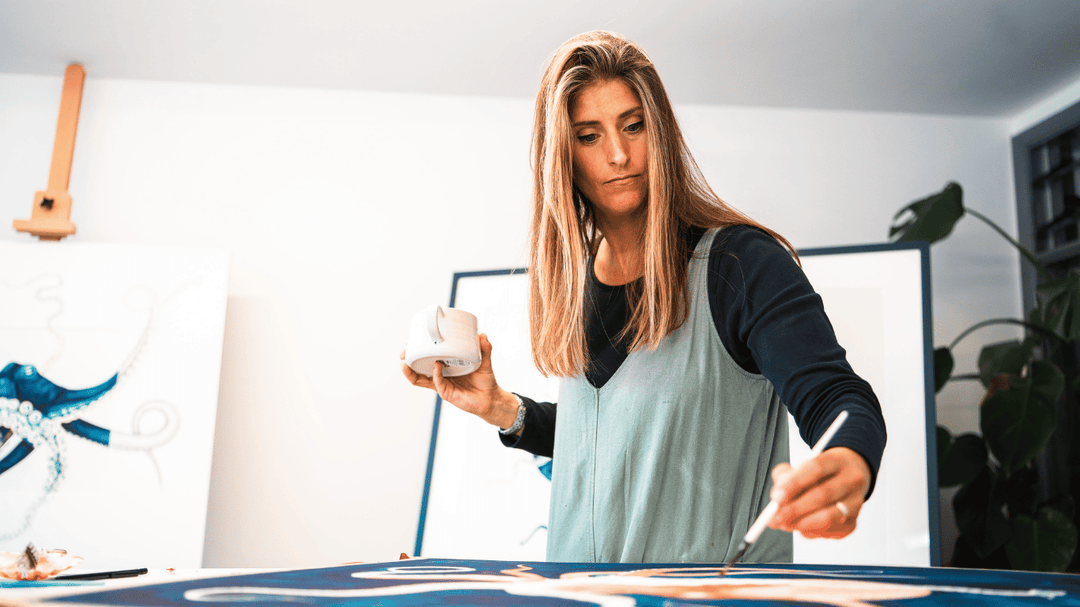
When injury stopped me running along that coastline the way I used to, I needed somewhere to put all that energy. Painting wildlife found me at exactly the right moment.
Because here's the thing about painting a creature — really painting it. You have to look. Properly look. At the way light catches a jellyfish. At the intelligence behind an octopus's eye. At the ridiculous, joyful audacity of a kingfisher's colour. And in that looking, something shifts. You stop rushing. You connect. You remember what an extraordinary world we actually live in.
That's why I paint wildlife. Not just because it's beautiful — although it is, wildly so. But because it makes people feel something. A flash of wonder. A moment of pure joy. That electric sense of being connected to something bigger than the everyday.
Every piece I paint is an attempt to bottle that feeling and bring it indoors — so that even on the greyest, noisiest, most overwhelming of days, you can look up at your wall and remember.
The wild is still out there. And it's glorious

How And Why Should We Connect With Nature?
If you are interested in how nurturing a connection with nature can benefit your wellbeing, I would recommend The Science of Happiness podcast episode titled ‘The Healing Effects of Experiencing Wildlife’. It includes a brilliant interview with environmental researcher Liz Lev, who spoke with a number of park visitors and found that carving out time to connect with wildlife both created a safe space for experiencing emotions and deepened connections with those who spent time in nature together.
Therefore, alongside the mental health benefits that the Wildlife Trust also emphasises in their blog - where they reflect that engaging with the natural world ‘helps you be more present and mindful’ - connecting with nature can also help nurture your relationships.
So, what are the different ways you can connect with nature? The WWF website features a lovely article that highlights various activities, from the more obvious options such as hiking and gardening to the Japanese practice of Shinrin-yoku, also known as ‘forest bathing’.
Most relevantly, the WWF also notes that a key way to nurture this connection is through creative inspiration - whether that is ‘through painting’, as demonstrated by Samantha, or perhaps through 'drawing, crafting, photography, or writing. The possibilities are endless.'

Conclusion
All in all, there is a profound sense of calm and powerful reflection to be gained from reconnecting with nature. This is why Samantha paints wildlife: it anchors her in a grounding space where feelings are free from judgement and the noise of everyday life momentarily subsides.
Explore Samantha's collections.
Written and Edited by Erin Churchman and Samantha Frances

Leave a comment